
Godzilla Minus Zero: Living On Borrowed Time | Spoilers Free
Obra maestra
There's something that barely exists in today's movies: sitting down in your seat with no idea what the monster you're about to see looks like. That happened to me with Godzilla Minus Zero, and you have no idea how much I missed it. I knew Godzilla was going to show up, of course, but I didn't know if he was bigger, if he moved differently, if he was the same one from the last movie or something worse, and that simple doubt had my stomach in knots from the moment the lights went down.
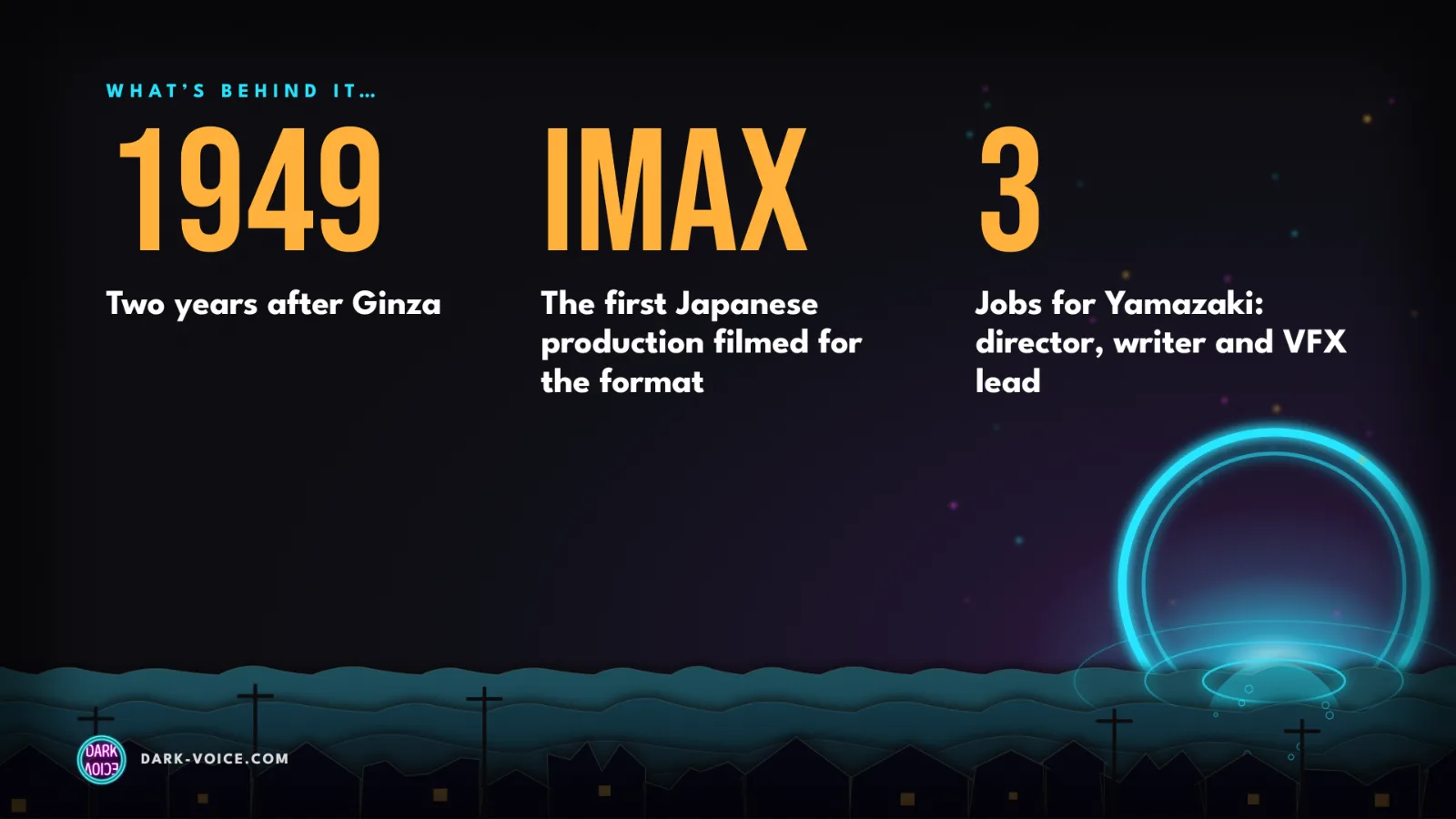
So now, let's talk about the long-awaited Japanese sequel starring this great god called Gojira. A sequel that took practically no time to arrive, barely three years after Minus One, and that with a budget only slightly bigger than its predecessor's delivers a narrative and visual upgrade nobody saw coming. Takashi Yamazaki returns as director, writer and visual effects supervisor, and he himself said he didn't want to build up expectations, that he was just going to try to make a really good movie for the fans and for general audiences... and boy, did he pull it off. Join me for this spoiler-free review.
Roars Without Trailers
Let's start with the marketing, because it was one of the best campaigns in recent memory, and not because it did anything extraordinary, but because of something as simple as never fully showing you the real protagonists, the kaiju, in any of the trailers before release. Everything was built on sounds, destruction effects, terrified faces and roars in the air, and with that you had to imagine what you were going to see. It's one of the best marketing decisions I've seen in years, and Hollywood should learn a lot from Japanese cinema here.
Because nowadays movies tell you the whole plot before you even set foot in the theater. They throw fifty trailers at you that, together, have already told you who the villain is, how they're going to beat him, who's going to die and who the heroes will be. Not here. Here you know Godzilla is coming, but what does he look like? How does he move? Is he bigger? More destructive? You don't know. What is he up against? The roars and the flashes of energy give you clues, but will you be right? How will they face it? Will humans help, or end up crushed? Nothing, you know nothing, and that's the beautiful part, because you go to the movies the way people used to, to discover.
I wish more critics and outlets understood that one of the greatest joys of cinema is walking in spoiler-free, and stopped dropping images and plot points in their day-one recaps. That's why the magic of going to the movies gets lost so often, and even though it's a separate topic, it's worth bringing up, because the damage they do to the industry and to whoever pays for a ticket is real.
Gods Above, Humans Below
Now, let's get to what everyone's asking: are there kaiju? Yes. Do they show up a lot? More than in other Godzilla movies, of course. Did they need to show up more? No, not at all, and as I said in my Minus One review, filling the screen with monsters is a job for Hollywood's MonsterVerse. If the Japanese have taught us anything, it's how to build a human drama the way it should be done, how to put humans in the middle of gods without making you feel they're in the way, interrupting the plot or just filler.
Here the humans are smart, and even with limited resources, like the ones postwar Japan had, they find a way to push forward and reach their goals. They fail, and they try again with better plans, better data and always with the idea of a better future ahead. And if the Japanese people have proven anything, it's that resilience and a prosperous future aren't pretty phrases for a poster, they're part of everyday life, and the movie understands that so well that every human plan feels like a hand raised against something that, in theory, shouldn't be possible to face with bare hands.
A Family Among The Rubble
Which takes us to the human side, the part that can truly break your heart. Minami Hamabe returns as Noriko and Ryūnosuke Kamiki as Shikishima, and the story finds them in 1949, two years after the Ginza tragedy. They now have a more stable life, with the feeling that they finally managed to build a safe world for their adopted daughter, a home where things started getting better. Together they've left behind not only life-or-death situations, but also trauma, grudges and the reflexes of a life full of obstacles, becoming a loving family surrounded by people who care about them and love them.
There are more supporting characters around them, but the one I really want to praise is Hidetaka Yoshioka as Dr. Kenji Noda. A phenomenal actor who conveys kindness, intellect, strength, sadness and resilience like few others, with decades of work in Japanese cinema, and who shows us that it doesn't matter who you are or what kind of body you have, a great performance comes from experience and the drive to do things right. There's excellence in every one of his expressions and, above all, in his voice, which carries every emotion the character needs without hesitation. A standing ovation for one of the best actors in this movie.
The Cycle One Person Stops
Just like in Minus One, you can feel the postwar atmosphere, the one where families lost everything and fear still hangs in the air, and where, even with all the resilience, there's still some hatred toward those who led the country into disaster and toward the foreigners who brought destruction to their towns. The critique of the Japanese government is quite clear without being exaggerated, aimed at its indecision and its lack of honesty with its own people at the time. And the critique of a United States that, after winning the war, imposed conditions and punishments without even thinking about staying to help the farmers and honest workers who lost everything in the nuclear fire, money, property, family and life itself, hits even harder.
It's also a critique of our modern society, where if something doesn't happen within our own shores, we don't care. Since we don't see our neighbor suffer, we're unable to drop our plans to lend a hand, and even when we see it face to face, we often just step aside so we don't get our hands dirty and can run in time to the nearest shelter, or to any escape from reality. The movie reminds you that even if you're not the one affected, you live in a world where the person next to you matters as much as you do, from the orphans who need love and a home to the elderly who lost everything in their final years.
Forgiveness and tolerance aren't easy, and the movie doesn't sell them as easy. The cycle of hate can repeat as long as just one person decides to keep it going, but it can also stop if just one person starts to light that spark. In the end, forgiving isn't forgetting, it's understanding that revenge is more than justice, it's continuing a cycle that sooner or later comes back to you or to those who come after you. And if you decide to stop it, if you decide to be part of the change, big things can happen, not just in your world, but in everyone's.
A Living Miniature In IMAX
The visual effects are among the best things in the movie. With a budget very similar to the previous entry, the stakes went way up, and in very little time the Shirogumi team managed to improve every one of its techniques, with cities and monsters so impressive you feel part of that world. And yes, of course, it's a classic Godzilla, he still looks like a moving miniature, but the movement is smoother and more real, one that respects that classic Toho vibe while using every resource to fill the screen it was designed for.
Because yes, folks, it's the first Japanese production filmed for IMAX, with IMAX-certified cameras and sequences that open up to the full height of the screen, and it's worth every cent of the ticket. The sets, the size of the threat and the size of the characters' hearts are only justified by cinematography at this level, the kind that makes you feel you're in that era, in that situation and right in the middle of that action. If you can see it in IMAX, do it, because that's exactly what it was made for.
Footsteps That Sound Like A Score
The colors, the effects and the music accompany a masterful script, but they deserve praise as a whole, because there isn't a single minute when you're not on the edge of your seat. Godzilla's theme rumbles inside you like when the T. rex's footsteps in Jurassic Park made the glass of water shake, except here what's coming closer is the music. You can tell if something bad or something good is happening, if the King is winning or losing, just by listening to the notes, placed with a precision that's a joy to hear.
And don't get me started on the themes that accompany the movie's darkest moments, an ode to classic Japanese horror, the kind where fear didn't come from pointless jump scares but from stirring something in your head and chest you can't describe. The music pulls it off, and that's why I say classical music is giving this movie a standing ovation. Thank you for that.
The King Who Lends Us Life
And now, let's talk about what we all want: Godzilla. A Godzilla ten times, a thousand times, a million times better than any other, imposing, massive, beloved, feared and admired. Every frame he's in commands respect, even knowing he's a fantastical being on a screen, and there's never a moment when you don't feel the power of nature in his roar, his atomic breath or his footsteps. He is and always will be the King of the Monsters, not because he has no rival or because he's the most powerful, but because of what he leaves us: the lesson that nature only lets us be here as a gift, and that whenever it wants, it can take everything away. Humans have ingenuity and technology, but nature is life itself, and behind life there's always death, like a companion that never leaves and catches up with all of us, sometimes fairly and sometimes not, but it's there, accompanied, of course, by a great story.
Something fantastic is that, even though it's a direct sequel with the same characters, you can watch it without having seen the previous movie. Through certain images and dialogue you get an idea of what happened before, so it stands on its own, something you rarely see in Hollywood, where every installment asks you to do homework first, and that earns the production a lot of points.
And to wrap up, Yamazaki has already been offered work on this side of the world, and he himself said he turned down several offers to focus on this movie. Whether he'll take on another installment, who knows, but wherever destiny and the rough sea take him, I hope he always finds the greatness of his creativity and that commitment to doing things with love. Because what rebuilds a city after Godzilla isn't concrete, it's the people who decide not to repeat the hate, and nobody builds that for you. This is a resounding yes to Godzilla Minus Zero.
Comentarios (0)
Ya terminaste esta
¿Y ahora qué ves?
Godzilla Minus One Review: Embracing Our Own Demons, No Spoilers
cine · 8 min
Godzilla x Kong: Fire Up The Reactors, Grab The Axes | Review
8 min
Monarch: Legacy of Monsters: Living In A World Of Titans
4 minQue no se te pase la próxima
Te aviso por correo cuando salga una reseña nueva. Sin spoilers, lo prometo.